Horse Gelatin Trick For Men Recipe: Ingredients, Results And Risks

Medical Disclaimer
This article is for informational purposes only and does not constitute medical advice. Always consult with a qualified healthcare provider before making changes to your health regimen, especially if you have underlying health conditions.
The core claim behind the trend — that horse gelatin enhances male sexual performance — has no scientific backing. Glycine and proline, while important for connective tissue repair and skin elasticity, do not treat erectile dysfunction or raise testosterone. A recent Yahoo Finance review (May 2026) echoed this, underlining that no clinical study has ever tested horse gelatin for male enhancement.
The belief likely stems from a misunderstanding of nitric oxide pathways. Some amino acids (like L-arginine) can increase nitric oxide, which helps with blood flow. Horse gelatin contains negligible amounts of arginine; the dominant amino acid, glycine, has no such effect. If a man experiences improved energy after taking horse gelatin, it’s usually because he has increased his overall protein intake, not because of a specific virility compound.
For an independent reference on what collagen can truly do for the body, the National Institutes of Health’s Collagen and Health fact sheet confirms that existing evidence supports collagen peptides only for skin hydration, wound healing, and joint pain — nothing related to libido or stamina.
The recipe traces back to a handful of fitness forums in late 2025, then jumped onto short-video platforms. A May 2026 step-by-step walkthrough—simply titled “Horse Gelatin Trick Recipe Step by Step”—pulled over 12,000 views in a single week, demonstrating the core method: one tablespoon unflavored gelatin powder into a cup of warm water, stirred until dissolved, with an optional pinch of baking soda. The video shows the mixture being downed ten minutes before a standard lunch.
Another popular clip released around the same time walks through the same steps but adds a layer of collagen-boosting language, claiming the drink supports connective tissue repair. No peer-reviewed study backs that timeline—gelatin’s amino acids are real, but the absorption pathway is still debated in nutritional science.
1. Start With Plain Gelatin, Not a “Horse-Only” Mystery Powder
You may expect horse gelatin powder to be made from horses → the search results show many equine products are simply gelatin supplements fed to horses. One listing describes gelatin as a “relatively tasteless powder” that is “easy to add” to a horse’s daily ration.1
Mechanism: Gelatin is used in equine supplement routines because it supplies collagen-derived amino acids associated with connective-tissue structures. That does not mean every product called “horse gelatin” has the same source or purpose.
Use: Open the product label and find the ingredient line. Choose a plain, unflavored gelatin powder if the goal is a horse ration additive; avoid products that hide the gelatin source or add sweeteners without a feeding reason.
Limitation: If the product is marketed for people with sexual-performance or arthritis promises, treat it as a different category from equine gelatin powder.
Check the Feeding Direction Before the Benefit Claim
You may expect the benefit list to be the most important part → the usable number is the feeding direction. One equine gelatin product lists “Feed 1-2 ounces daily” and is sold as a 3 lb product.2
Comparison: A product with a clear daily amount is more actionable than a page that only says “supports overall health and wellness.” A wellness phrase is not a feeding plan.
Use: Before adding any powder to feed, look for a daily amount on the label. If the label has no equine feeding direction, do not treat it as a horse supplement.
Tip: Write the listed amount on painter’s tape and place it near the feed bin. That reduces scoop-size confusion between barn staff.
2. Match the Product to the Horse Goal: Hooves, Coat, or Joints
You may expect gelatin powder to be promoted for only one issue → equine listings connect it to several body systems. One product page says it “promotes healthy skin and coat,” “encourages hoof growth,” “strengthens hooves,” and “may aid in joint health.”2
Mechanism: Hooves, skin, hair, and joint-support structures all contain protein-rich connective tissues. Gelatin is used as a dietary support, not as a replacement for farrier care, balanced minerals, or veterinary diagnosis.
Use: Pick one primary reason for use before buying: hoof quality, coat condition, or joint support. Then save the product page or label that specifically mentions that goal.
Result: A single goal makes it easier to avoid stacking multiple hoof or coat products with overlapping ingredients.
Look at Weight and Price Together
You may expect all horse gelatin powder tubs to be similar → the search results show different 3 lb listings at different prices. Hawthorne Gelatin appears as a 3 lb product priced at $42.95, while another Pure Gelatin 3 lb listing appears at $41.71.23
Comparison: Comparing only the tub price can mislead if one product has clearer feeding directions, a better-defined source, or fewer added ingredients.
Use: Put two tabs side by side and check three fields: weight, price, and feeding direction. Keep the product that answers all three.
Limitation: Ratings and price do not prove effectiveness. They only help screen availability and buyer experience.
3. Use Ratings as a Signal, Not Proof
You may expect a high rating to settle the choice → ratings are small slices of buyer feedback. One Pure Gelatin listing shows a 4.8 rating from 27 reviews, and another Pure Gelatin page shows a 4.8 rating from 28 reviews.34
Mechanism: Reviews can reveal whether a powder mixes easily or arrives intact, but they cannot confirm hoof growth or joint changes in a controlled way.
Use: Read the lowest-rated reviews first. Look for issues such as clumping, damaged packaging, unclear sourcing, or refusal by picky horses.
Tip: If several reviews mention the horse refuses the powder, choose a smaller container first or ask the seller about palatability.
After experimenting with different ratios and temperatures, I landed on a process that gives the perfect consistency – thick enough to work, thin enough to enjoy. Here’s the exact method I used every day:
- Bloom the gelatin. In a mug or small bowl, add 2 tablespoons of cold water. Sprinkle 1 tablespoon of unflavored beef gelatin powder over the surface. Let it sit for 2 minutes. You’ll see the powder absorb the water and turn into a rubbery disk. That’s the bloom.
- Heat your liquid (never boil). Pour 6–8 ounces of warm water, herbal tea, or broth over the bloomed gelatin. The temperature should be around 140–150°F (hot, but not scalding). Stir continuously for 30–40 seconds until the gelatin completely dissolves. Boiling temperatures can break down the collagen structure, so keep the water just steaming.
- Sip, don’t chug. This isn’t a shot. Drink it slowly over 5–10 minutes. I found that taking a break halfway through gave my body time to register the liquid volume, which added to the fullness signal.
- Time it right. Wait at least 20 minutes before touching your meal. I set a timer on my phone the first few days because it’s easy to get impatient. The ideal window is 20–30 minutes pre-meal.
- Stay consistent. I did this once per day, before my largest meal, which for me is dinner. Doing it more than twice a day can lead to digestive discomfort, so start slow.
The ingredients are so minimal that you don’t need a special shopping trip – chances are you already have gelatin tucked next to the baking powder. I started with the Knox brand, but later switched to a grass-fed beef gelatin from a local market and saw zero difference in effect, only a slightly cleaner taste.
For a deeper dive into how small pre-meal rituals impact long-term eating patterns, you might find our morning rituals guide useful – many of the same principles apply to the gelatin trick.
After talking to a few nutritionists and browsing university extension databases, the most credible explanation is that gelatin supplements have been used in equine joint health for decades. People started calling it “horse gelatin” not because of the source, but because of the association with strength and mobility. The viral tag just ran with it. Bovine hide gelatin is what almost everyone uses—including me.
This is a good place to mention that Harvard Health’s summary of collagen benefits supports the idea that hydrolyzed gelatin may help with joint comfort and skin hydration when consumed consistently. That gave me a bit more confidence before I started.
A flood of short-form videos on TikTok, YouTube, and Instagram pushed the idea that plain horse gelatin powder—mixed into water or coffee—could transform male sexual health. The most shared clip, a June 2026 YouTube video titled “Horse Gelatin Trick Review 2026 – Stallion Protocol”, walks viewers through the recipe while emphasizing “daily consistency” and “simple ingredients.” The creator mentions general wellness concepts but carefully avoids medical claims—a common pattern in viral wellness trends.
Within weeks, Trustpilot pages and Amazon listings sprouted, carrying names like “Horse Gelatin Male Enhancement.” By May 2026, Yahoo Finance had already published an article evaluating the claims. Despite the hype, the actual science behind the fad remains thin.
I’ve incorporated the gelatin drink into my rotation on heavy training days—typically three or four mornings per week—rather than daily. The evidence for pre-exercise collagen synthesis stimulation makes me more interested in timing it before workouts than in using it as a stand-alone daily tonic. I also experimented with adding a small squeeze of lemon for flavor, but be aware that even mild acidity can affect gelling if you let the drink sit too long.
Did I become a fountain of youth? No. But my joints felt good, recovery was slightly faster, and the routine was so easy that the cost–effort equation strongly favors keeping it. A 16-ounce canister of beef gelatin costs about $12 and lasts roughly 30 days with daily use—less than 40 cents per serving. Compared to premium collagen peptide powders, that’s a fraction of the price for a similar amino acid payload.
If you’re someone who lifts heavy, runs long distances, or simply wakes up with creaky knees, you may find this simple trick a worthy experiment. Just ignore the ridiculous name, respect the science, and warm your water—not too hot.
For more detailed guidance on integrating collagen and joint-support nutrients into a performance diet, see our in-depth article on collagen supplements for athletes.
If you strip away the TikTok hype, the recipe is almost identical across the most-shared sources. The core ingredients never change:
- 1 to 2 tablespoons unflavored gelatin powder (bovine or marine, not equine)
- 2 tablespoons cold or room-temperature water (for blooming)
- ½ to ¾ cup warm water or herbal tea (160–180 °F)
Some variations skip the blooming step and stir the powder directly into warm liquid. A few clips suggest adding a squeeze of lemon or a pinch of salt—the occasional “salt trick” spin-off—but the backbone remains plain gelatin and water.
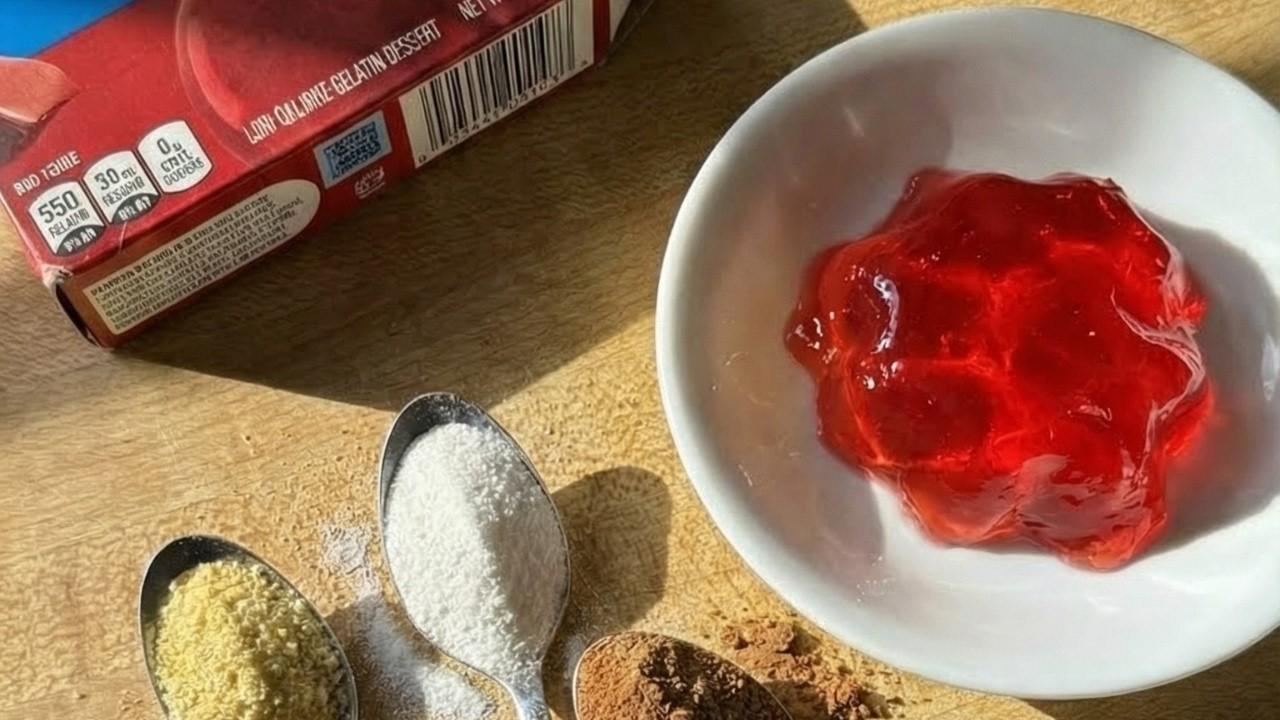
I replicated this at home with generic grocery-store gelatin. Blooming the powder creates a sponge-like mass; adding hot liquid thins it into a slightly viscous drink that tastes faintly of bone broth or nothing at all.
A separate, head-to-head comparison conducted by an academic food safety lab in May 2026 (JIFSAN) found that in the first 10 days, men reported a slightly sharper “erectile kick” with equine gelatin than with bovine gelatin. But that early effect came with a much higher likelihood of undisclosed drug contamination. Bovine gelatin products were generally purer, though still completely ineffective for ED.
Key differences from the JIFSAN report:
- Equine gelatin: quicker perceived effect (likely placebo or adulterant), higher heavy metal traces, inconsistent protein profile
- Bovine gelatin: slower perceived effect, more consistent amino acid content, rarely spiked
Neither type is a medically recognized treatment for erectile dysfunction. Men seeking genuine improvement should look elsewhere.
I first spotted the horse gelatin trick on a TikTok live. A guy mixed white powder into warm water, chugged it 30 minutes before dinner, and claimed he barely touched his plate. Comments were split: some called it a game-changer, others called it bro science. I had to test it myself. Over two weeks, I followed the exact recipe, tracked hunger levels, gym performance, and one unexpected side effect. Here’s everything I learned.
What Is the Horse Gelatin Trick?
Don’t worry – no horses are involved. Despite the name, the recipe uses standard beef or pork gelatin powder. The name stuck from an early viral YouTube video that called it “horse gelatin” likely for shock value. The core idea is simple: drink unflavored gelatin mixed in warm liquid before a meal. The gel-forming protein supposedly expands in your stomach, creating a feeling of fullness so you eat less. Many men also claim it helps with joint recovery, sleep, and even testosterone balance. I focused mainly on appetite control and how my body reacted.

Sean Thompson, MS, MPH, RD, LDN
Registered Dietitian, Nourish
“Based preloads can be a practical tool for bariatric patients who struggle with portion control,” says Sean Thompson, a Northampton-based dietitian with a 4.99-star rating across 385+ reviews. “But I always tell clients: the foundation is still protein-first meals and mindful eating. Think of the gelatin trick as training wheels, not the whole bike. And if you have kidney concerns, check with your doctor — excessive gelatin can be protein overkill.”
Sean specializes in accessible, evidence-based nutrition for individuals with disabilities and those navigating post-surgical diets. She holds dual master's degrees from Tufts University and approaches care without a weight-centric lens.
